
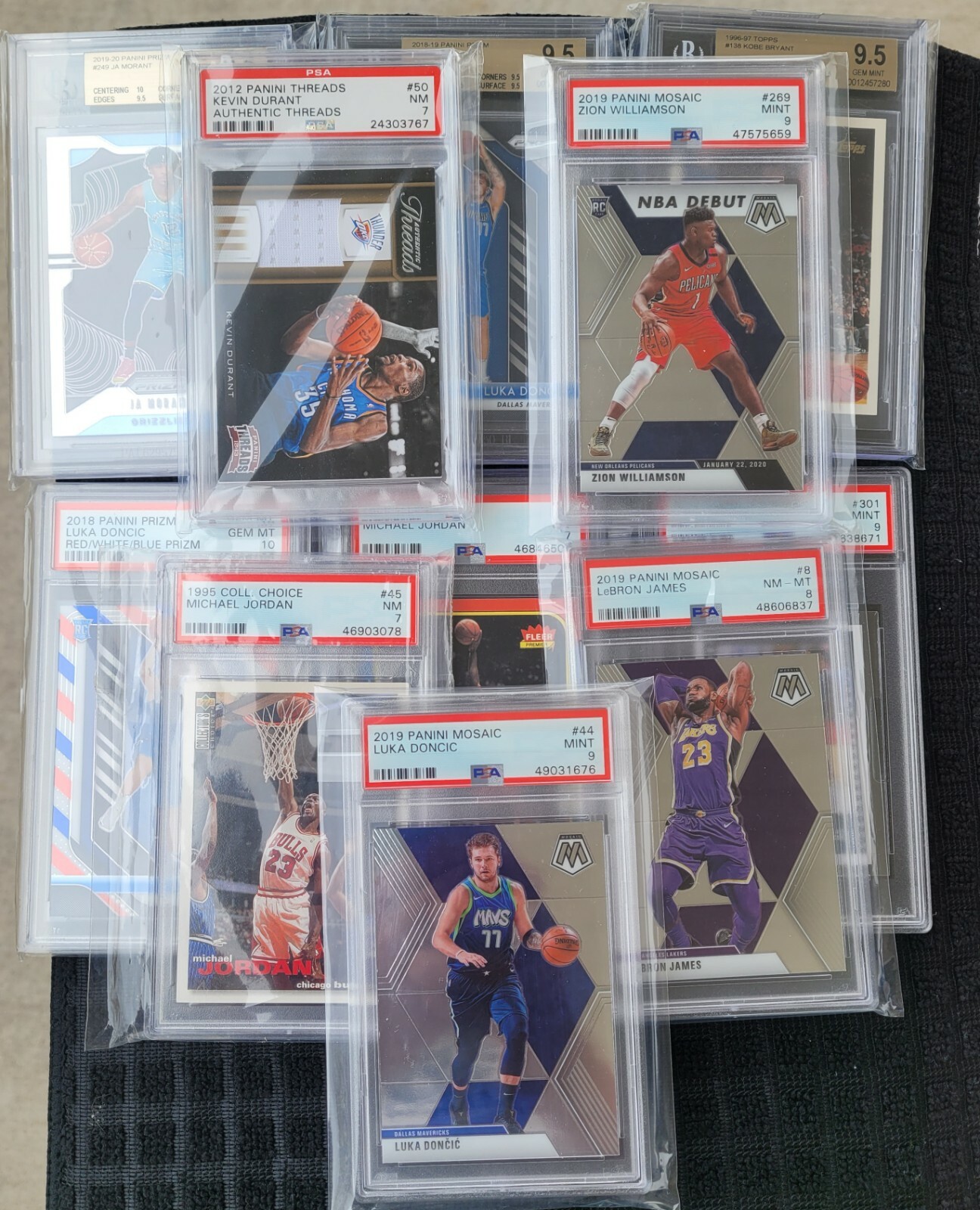
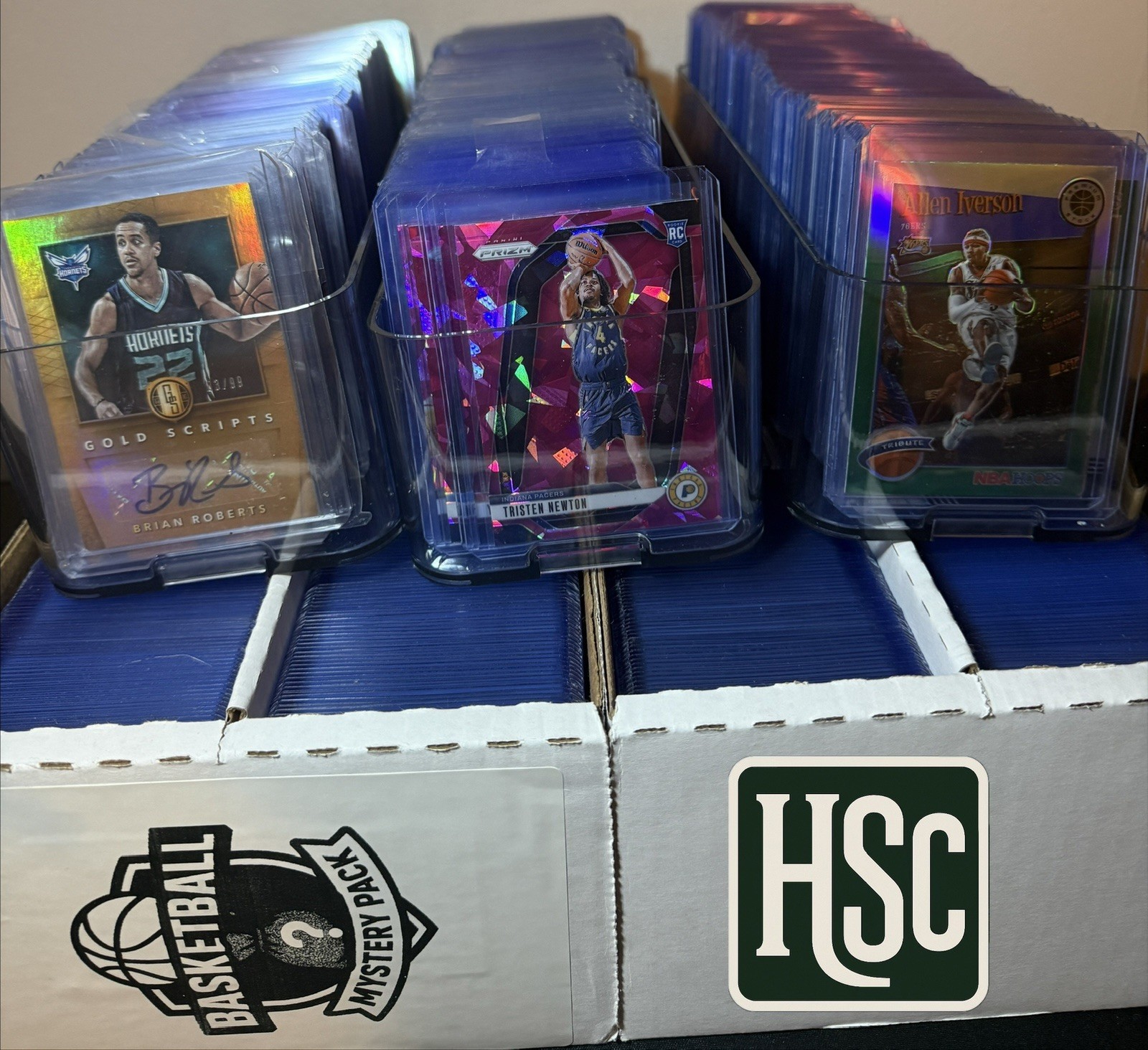
Photos from current listings. Actual item, color, and included accessories may vary.
Nba Basketball Card Buying Guide
NBA basketball cards are a collectible segment where value and durability hinge on print run scarcity, rookie status, and professional grading rather than material quality. The core trade-off is between ungraded bulk lots (high volume, low per-card ceiling) and individually curated hits or graded slabs (lower volume, defined condition and authentication). The decision rule: buy lots for volume and set-building, buy graded or serial-numbered singles for investment-grade condition and liquidity.
At a glance
- Category
- Basketball Cards
- Last updated
- Nov 23, 2026
Current offers
Highlights
- Grading tiers: PSA 10 gem-mint commands the largest premium; BGS 9.5 with 10 subgrades rivals it, while raw cards carry condition risk and lower resale liquidity.
- Rookie cards (RC) from flagship Prizm, Optic, and Select sets anchor value; base vet cards in the same set trade at a fraction of rookie pricing.
- Serial-numbered parallels (/99, /49, /25, /10, 1/1) are the primary scarcity mechanism; lower print runs directly multiply secondary-market demand.
- Autograph and memorabilia cards (RPA, patch auto) are the highest-tier hits; on-card autos generally outrank sticker autos for collector demand and long-term hold.
Best use cases
- Best fit: buy a 100- or 200-card lot when starting a collection or set-building — you get rookies, parallels, and inserts at low per-card cost, but expect mostly base and low-tier parallels.
- Best fit: buy sealed graded-card packs or slab lots when you want authenticated condition without grading submissions — ideal for gifting or quick portfolio entry.
- Wrong fit: skip bulk lots if your goal is a single investment-grade rookie; buy a specific PSA/BGS-graded rookie or numbered parallel instead.
- Wrong fit: skip ungraded 'hot pack' claims if condition is critical — raw cards can have surface, corner, and centering flaws that kill grading upside.
Buying tips
- For investment, target rookie cards from flagship sets (Prizm, Optic, Select) in PSA 9/10 or BGS 9.5+; raw base vets rarely appreciate.
- Check serial numbering: parallels /99 or lower carry real scarcity; unnumbered 'refractor' or 'holo' inserts are common and lower-tier.
- On-card autos beat sticker autos for long-term value; verify the autograph is on-card and ideally graded/authenticated (PSA/DNA, BGS).
- Lots should specify year range and set brands; mixed-era 100–200 card lots are for volume, not for chasing specific rookies or numbered hits.
Specs
| Grading Standard | PSA 10 / BGS 9.5+ / Raw |
|---|---|
| Rookie Flagship Sets | Prizm / Optic / Select |
| Parallel Scarcity | Numbered /99 to 1/1 |
| Autograph Type | On-card vs Sticker |
Related searches
What to check before buying
- Confirm the card year and set (e.g., 2018-19 Prizm) — rookie status and print run vary sharply by year and brand.
- For graded cards, verify the slab grade and cert number match the card; PSA/BGS slabs should be sonically sealed with intact labels.
- For lots, check stated card count, era range, and whether hits (autos, numbered, memorabilia) are guaranteed or random.
- Check shipping protection: top loaders, penny sleeves, and rigid mailers are minimum for raw cards; slabs need bubble wrap and boxed shipping.
FAQ
Data sources: eBay / Amazon listings and product attribute feeds. Updated Nov 23, 2026.
Some links on this page are affiliate links. If you buy after clicking one, we may earn a commission at no extra cost to you. This does not change which products appear here or their order. Affiliate disclosure.