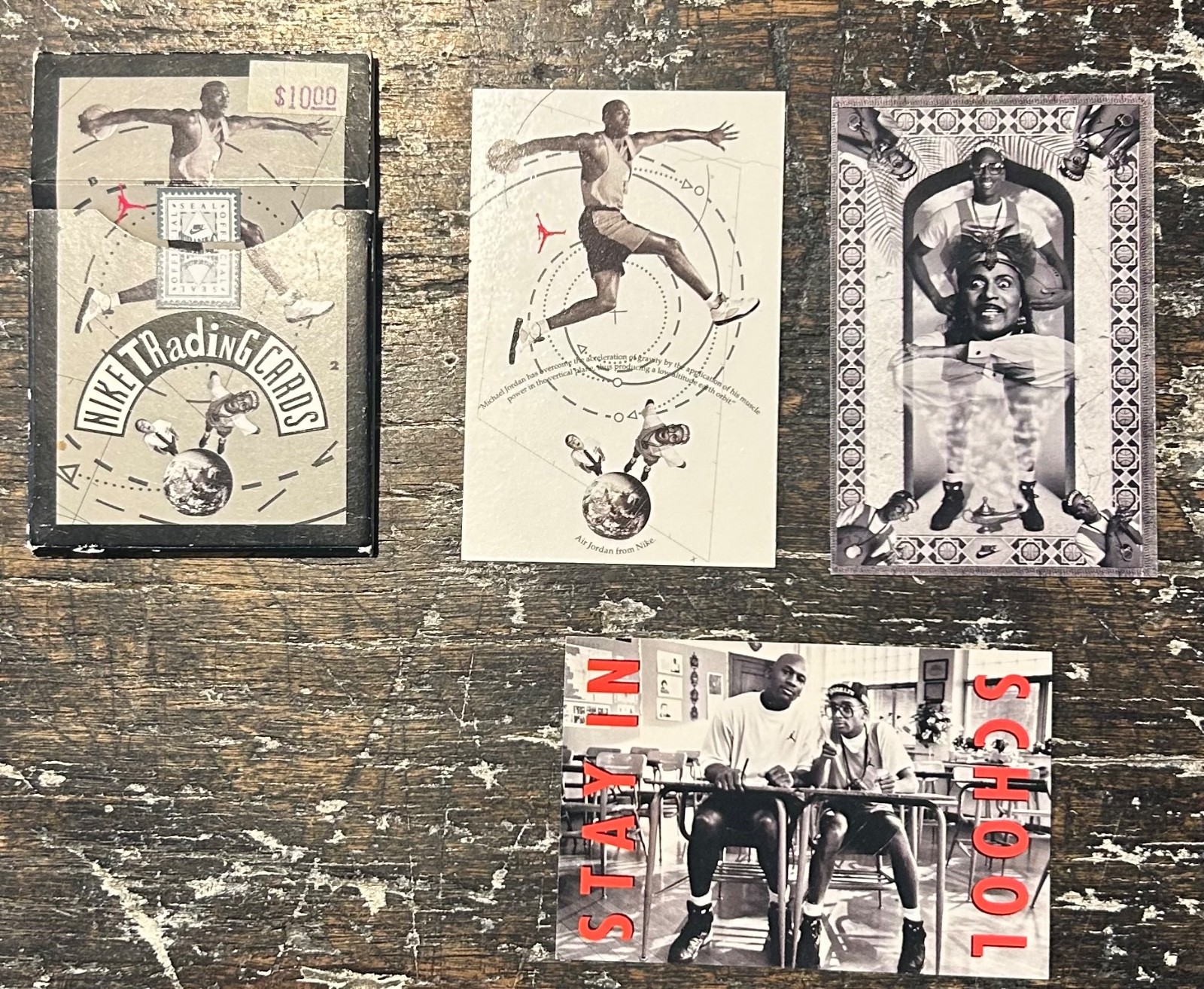

Photos from current listings. Actual item, color, and included accessories may vary.
Michael Jordan Card Buying Guide
Michael Jordan cards are the single most collected basketball card segment, spanning mass-produced base cards from the 1986–1998 Bulls dynasty to rare inserts, parallels, and autographs. The core trade-off is print-run scarcity versus condition: a high-grade common card can outperform a low-grade rare card in liquidity, and the 1986 Fleer #57 rookie is the segment's benchmark—authenticated or not, it separates serious collectibles from reprints and junk wax. The decision rule: buy only cards that are either professionally graded (PSA, BGS, CGC, SGC) or raw with verifiable centering and no trimming, and skip any listing without a clear back image and print-era identification.
At a glance
- Category
- Basketball Cards
- Last updated
- Nov 23, 2026
Current offers
Highlights
- 1986 Fleer #57 is the definitive Jordan rookie; authenticated examples in PSA 8+ command the strongest liquidity, while raw copies carry trimming and reprint risk.
- Junk-wax era (1988–1994) base cards from Hoops, Skybox, and Upper Deck have massive print runs—value lives in inserts (Fleer All-Stars, Beam Team) and high grades, not base.
- Modern Jordan cards (2003–present) split into licensed Panini-era autographs/patches and unlicensed reprints; only NBA-licensed cards hold long-term collector demand.
- Jordan's 1990s inserts (1993 Fleer Ultra Famous Nicknames, 1997 Metal Universe Precious Metal Gems) are the scarcity tier—print runs under 100 define the top of the market.
Best use cases
- Best fit: a graded 1986 Fleer #57 PSA 8–9 for a long-term hold—the hobby's most recognized basketball card and the safest blue-chip anchor.
- Best fit: raw 1990s inserts (Skybox Beam Team, Fleer All-Stars) for collectors who want vintage-era Jordan without rookie-card pricing; buy only with sharp corners and clean surfaces.
- Wrong fit: modern base cards and unlicensed reprints if you want appreciation—these are print-heavy and lack the scarcity that drives Jordan values.
- Wrong fit: high-grade common cards (PSA 10 junk-wax base) as investments—pop reports are huge and prices are supply-driven, not demand-driven.
Buying tips
- Prioritize the 1986 Fleer #57 rookie: verify the Fleer logo, centering within 60/40, and sharp corners; PSA/BGS/SGC authentication is mandatory above raw.
- For 1990s inserts, check print-run and insert odds—Beam Team (1:4 packs) and Fleer All-Stars are common; PMG and Credentials are the scarce tiers.
- Grade before selling raw vintage: PSA 8 vs PSA 9 can mean multiples in value; submit centering-heavy cards only if corners and edges are clean.
- Avoid trimmed or recolored cards—look for uniform borders, consistent gloss, and seller-provided back scans; reject any card without a back image.
Specs
| Rookie Card | 1986 Fleer #57 |
|---|---|
| Era | Vintage 1986-98 / Modern 2003+ |
| Grading | PSA, BGS, CGC, SGC slabs |
| Licensing | NBA / Panini / Fleer / UD |
Related searches
What to check before buying
- Confirm the exact card year, set, and number (e.g., 1986 Fleer #57) before buying—Jordan has hundreds of cards across Fleer, Hoops, Skybox, Upper Deck, and Panini.
- Check grading slab authenticity: PSA, BGS, CGC, and SGC slabs have cert numbers verifiable on the grader's site; reject cracked or mismatched slabs.
- For raw cards, inspect centering (front and back), corner sharpness, surface gloss, and edge whitening—request high-resolution scans under natural light.
- Verify licensing: modern Jordan cards must carry NBA and Panini logos; unlicensed reprints (e.g., custom cards) have no official team marks.
FAQ
Data sources: eBay / Amazon listings and product attribute feeds. Updated Nov 23, 2026.
Some links on this page are affiliate links. If you buy after clicking one, we may earn a commission at no extra cost to you. This does not change which products appear here or their order. Affiliate disclosure.