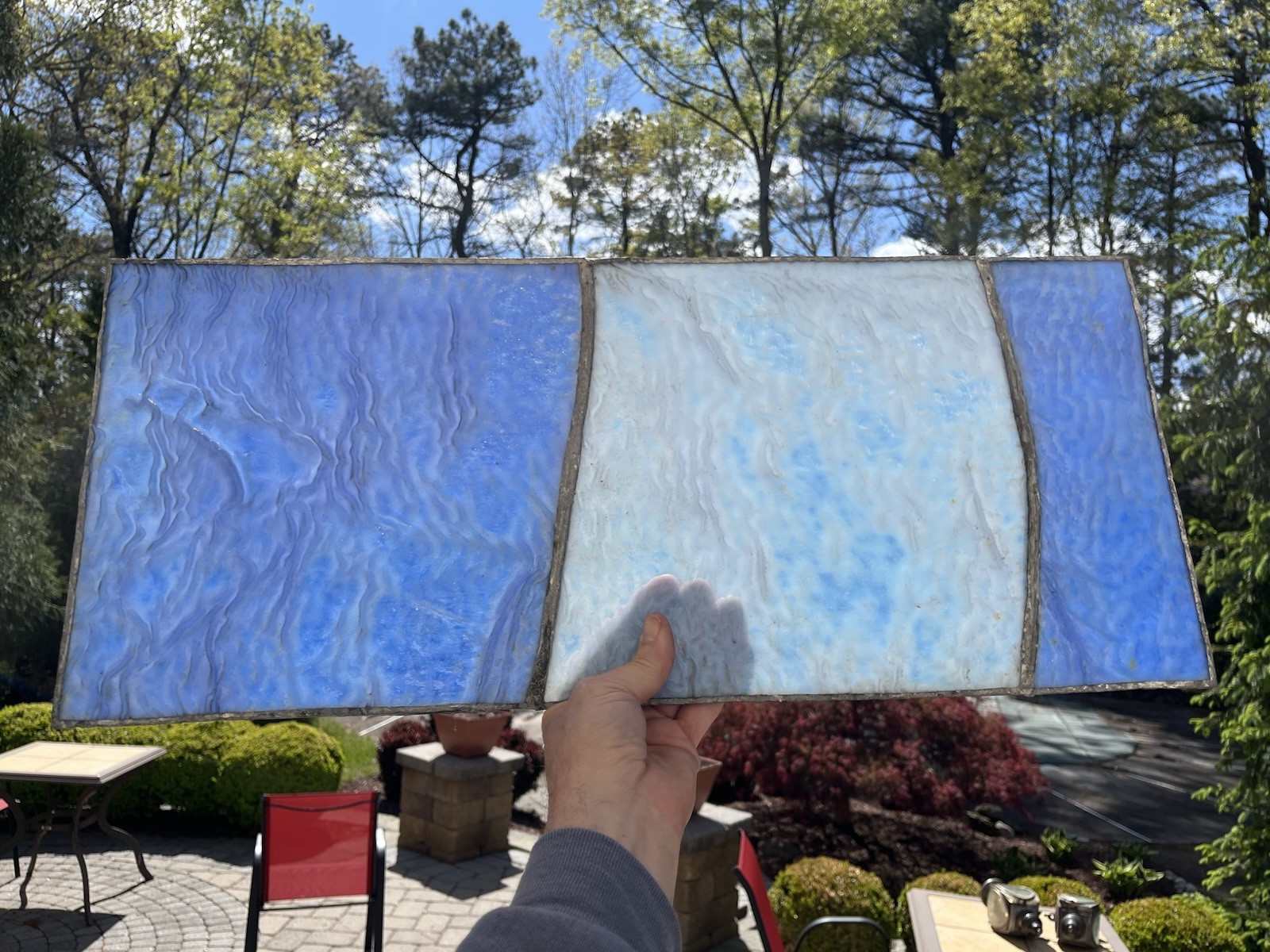

Photos from current listings. Actual item, color, and included accessories may vary.
Antique Stained Glass Buying Guide
Antique stained glass covers leaded, copper-foiled, and painted architectural panels from roughly 1880–1940, where value hinges on intact original glass, sound lead cames, and documented provenance rather than decorative surface appeal. The core trade-off is original period material versus later restoration or modern reproduction: true antiques use mouth-blown cylinder glass with irregularities and lead came that should be flexible, not brittle. The decision rule is simple—buy only panels with intact original glass, tight but movable lead joints, and clear provenance; skip anything with replaced glass, epoxy repairs, or 'vintage-style' new construction sold as antique.
At a glance
- Category
- Antiques, Pottery & Glass
- Last updated
- Nov 23, 2026
Current offers
Highlights
- Original mouth-blown cylinder glass shows subtle bubbles, striations, and thickness variation; modern float glass is perfectly flat and uniform—a fast authenticity check.
- Lead came joints should be tight yet slightly flexible; brittle, cracking, or whitened lead signals oxidation and past moisture damage, requiring full re-leading.
- Copper-foil construction (typical of Tiffany-style lamps) uses 1/4-inch copper tape and solder beads; leaded panels use H-profile came and putty, and the two cannot be mixed.
- Painted and fired-glass panels (ecclesiastical windows) have vitreous enamel fused at 1100–1200°F; cold-painted or acrylic-painted glass flakes off and is a restoration red flag.
Best use cases
- Best fit: interior transom or sidelight in a period home—choose a leaded panel with original glass and sound came sized to the opening; skip thin copper-foil panels for structural architectural use.
- Best fit: Tiffany-style lamp shade restoration—choose copper-foiled shades with intact solder seams and original slag glass; skip heavily re-soldered or epoxy-repaired shades.
- Best fit: framed decorative wall hanging—choose any intact antique panel with stable lead; skip panels with cracked or missing glass unless priced as salvage for re-leading.
Buying tips
- Measure the opening and subtract 1/8–1/4 inch per side for leaded panel clearance; antique panels are rarely perfectly square, so template the actual opening, not the nominal size.
- Demand a backlit photo: hairline cracks, missing putty, and glass mismatches only show against light; front-lit photos hide the most common defects.
- Inspect lead width: original came is typically 3/16–3/8 inch; overwide, lumpy solder lines indicate amateur re-leading, which lowers value and durability.
- For shipping, require rigid plywood crating with foam-blocked edges; leaded panels flex and crack in transit, and a 24 x 10 inch panel needs at least 2 inches of rigid perimeter protection.
Specs
| Construction Type | Leaded came vs copper-foil |
|---|---|
| Glass Origin | Mouth-blown antique vs float modern |
| Panel Era | c. 1880–1940 original vs later |
| Lead Condition | Flexible tight joints vs brittle oxidized |
Related searches
What to check before buying
- Measure the exact window or frame opening in both dimensions and confirm the panel's actual glass-plus-lead size, not the outer frame or shipping crate size.
- Check the hanging or mounting method: leaded panels need a rigid wood or steel frame with saddle bars for spans over 24 inches; unframed panels sag.
- Confirm indoor climate: lead and putty tolerate normal interior humidity, but unconditioned porches with freeze-thaw cycles accelerate lead oxidation and glass cracking.
- Verify whether the panel is sold framed or as a loose glass unit; loose panels require a custom frame and installation budget before display.
FAQ
Data sources: eBay / Amazon listings and product attribute feeds. Updated Nov 23, 2026.
Some links on this page are affiliate links. If you buy after clicking one, we may earn a commission at no extra cost to you. This does not change which products appear here or their order. Affiliate disclosure.