Choosing card binders & toploaders comes down to a practical fork: do you want an enclosed, ringless binder for a large TCG collection, or clear four-pocket sheets in a 3-ring format for larger cards and collectibles? The Rayvol 2300 Pocket Trading Card Binder and the Ultra PRO 100 4-Pocket Storage Pages Binder take very different approaches, so the better choice depends on how you organize and handle cards.
Quick verdict
Rayvol is the clearer match for shoppers who want a ringless binder with a zipper and side-loading access. Ultra PRO is the clearer match for shoppers who want page-based storage with four large cards per page, a 3-ring format, and compatibility up to 3.5" x 5.25". The deciding question is whether your priority is an enclosed TCG binder or a large-card page system.
Compact comparison
| Product | Listed price | Format | Listed card detail |
|---|---|---|---|
| Rayvol 2300-Pocket Binder | USD 69.99 | 36-pocket ringless binder | 2,300-pocket title wording |
| Ultra PRO 100-Page Binder | USD 38.49 | 3-ring, 4-pocket pages | Cards up to 3.5" x 5.25" |
Where each product wins
Where the Rayvol binder wins
- Enclosed handling: Side loading and a zippered closure are named features, while the description adds padded, extra-rigid front and rear covers made from non-slip, water-resistant material.
- Collection presentation: Double-sided low-friction black backing separates the front and back pockets and gives the pages a classic framed look.
- Ringless organization: The 36-pocket ringless format is a direct fit for shoppers who do not want a 3-ring binder structure.
Where Ultra PRO wins
- Large-card use: The stated 3.5" x 5.25" compatibility and four-card page layout suit large cards, vintage postcards, and other collectibles named in the description.
- Page construction: The pages are described as ultra clear, acid-free, heavyweight polypropylene with no PVC and UV protection.
- Defined page quantity: The binder includes 100 pages, with strong welds described as helping each page stay flat.
Product notes
Rayvol 2300-Pocket Trading Card Binder
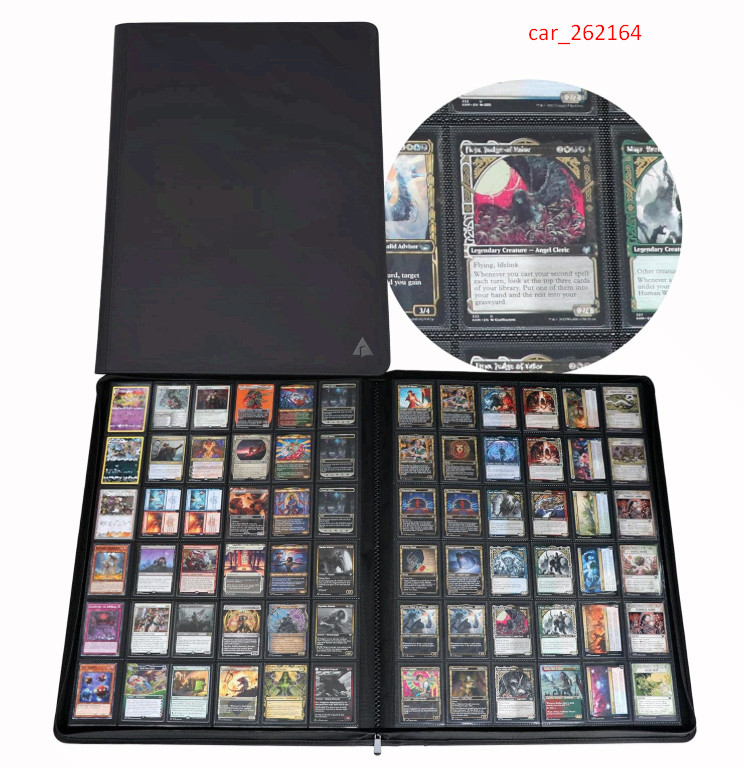
Rayvol makes the strongest case when the binder itself is the organizing system: its title combines a 2,300-pocket count with a 36-pocket ringless TCG format. Side loading and a zippered closure give the storage approach a clear handling identity, and the description adds padded, extra-rigid front and rear covers. The black backing separates the front and back pockets and creates the listed framed presentation. Those details suit a collector who wants a contained display format for trading cards, photos, or documents. The limitation is the $31.50 higher listed price compared with Ultra PRO. Choose Rayvol when pocket count, side access, and a zipper matter more than keeping the listed price lower.
Ultra PRO 100 4-Pocket Storage Pages Binder
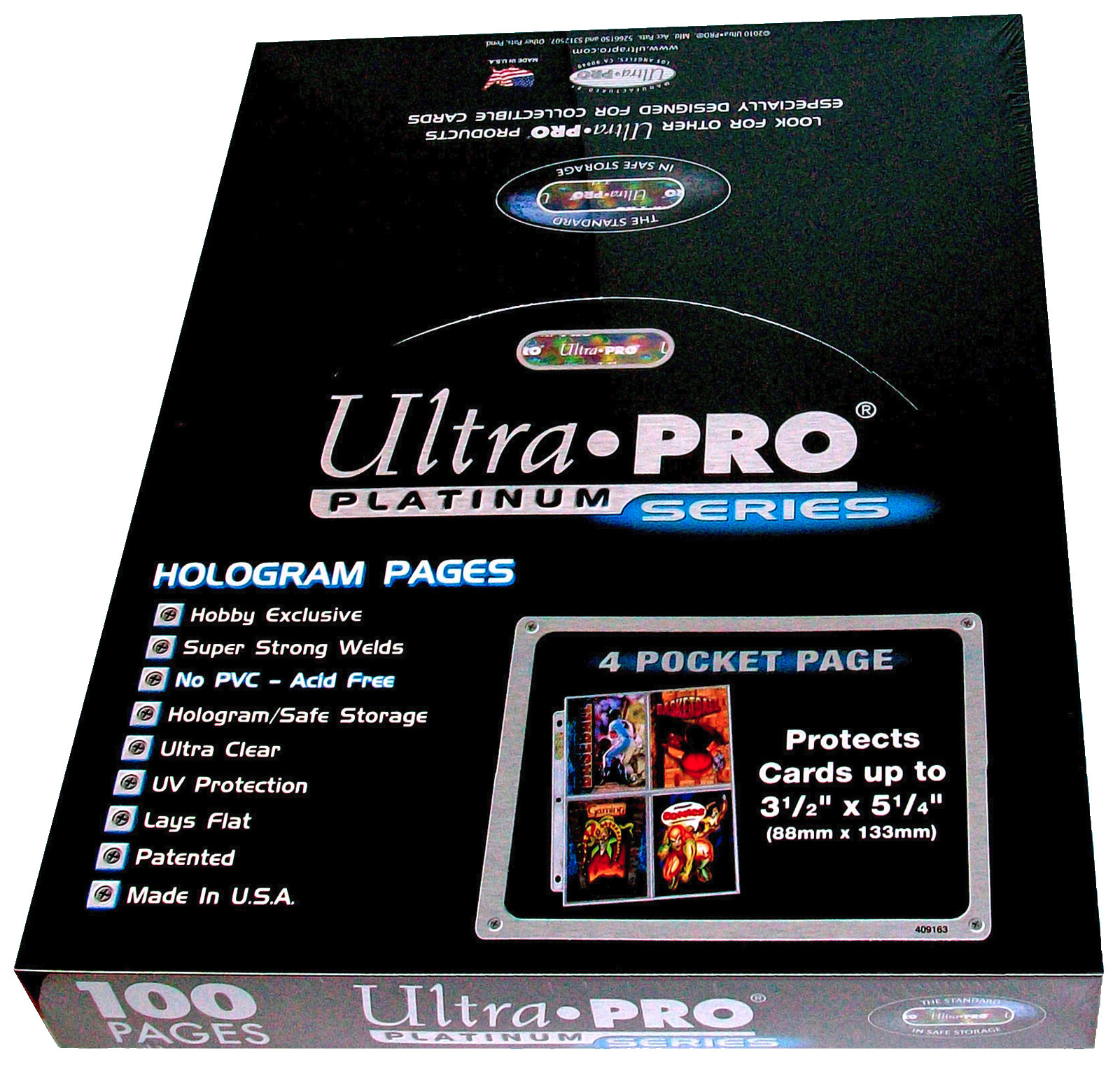
Ultra PRO takes a page-based route with 100 four-pocket sheets in a 3-ring binder format. One page holds four large cards, and the stated compatibility reaches 3.5" x 5.25", making it a specific match for large cards, vintage postcards, and other collectibles. Clear pages keep the contents visible, while acid-free heavyweight polypropylene, no PVC, UV protection, and strong welds are all named construction details. Its limitation is the top-loading design: shoppers specifically seeking side-loading access will be choosing a different handling style. Choose Ultra PRO when the large-card dimensions, clear pages, and lower listed price align with how you want to arrange a collection.
Final choice by use case
- Choose Rayvol when the deciding details are a 2,300-pocket title, ringless TCG format, side-loading access, and a zippered closure. Its black backing and rigid padded covers also suit a framed, enclosed presentation.
- Choose Ultra PRO when you want 100 pages of four-pocket storage, a 3-ring binder structure, and stated compatibility with cards up to 3.5" x 5.25".
- If price leads the decision, Ultra PRO is the lower listed-price choice, with a $31.50 spread separating the two binders. Select it for the page format rather than treating price as the only difference.