Choosing the right card binders & toploaders is really a choice between a straightforward album and a large-format storage system. The Card Binder 9 Pocket and 2300 Pocket Ringless Binder point in different directions: one keeps the format simple, while the other emphasizes extensive storage and enclosure. The useful question is whether your cards need a compact, browse-first home or a more structured archive.
That distinction matters because a binder that is easy to browse is not automatically the right fit when enclosure and presentation are the main concerns. This comparison keeps the decision focused on page format, handling, and price rather than shared construction details.
Quick verdict
Choose Card Binder 9 Pocket when you want a lower-priced album for standard-size TCG cards and prefer a fixed, uncomplicated format. It is priced at USD 9.11. Choose 2300 Pocket Ringless Binder when a large-format, ringless design with enclosed handling is the priority; it is priced at USD 69.99. The absolute listed-price difference is $60.88, so the extra spend is tied to a substantially different storage approach rather than a minor feature change.
Price and format comparison
| Product | Listed price | Core format |
|---|---|---|
| Card Binder 9 Pocket | USD 9.11 | 9-pocket album; polypropylene |
| 2300 Pocket Ringless Binder | USD 69.99 | 36-pocket ringless binder; large size |
The table captures the main split: a page-based album versus a large, ringless format. Shared black polypropylene construction is not a useful deciding factor because both products specify it.
Where each wins
- Card Binder 9 Pocket: wins for a fixed-page setup with double-sided browsing. Its description specifies 20 permanently bound pages and nine pockets per page, making the organizing format clear.
- 2300 Pocket Ringless Binder: wins for enclosed handling and presentation. Its padded, extra-rigid covers, zippered closure, and low-friction black backing create a more structured storage design.
Product notes
Card Binder 9 Pocket
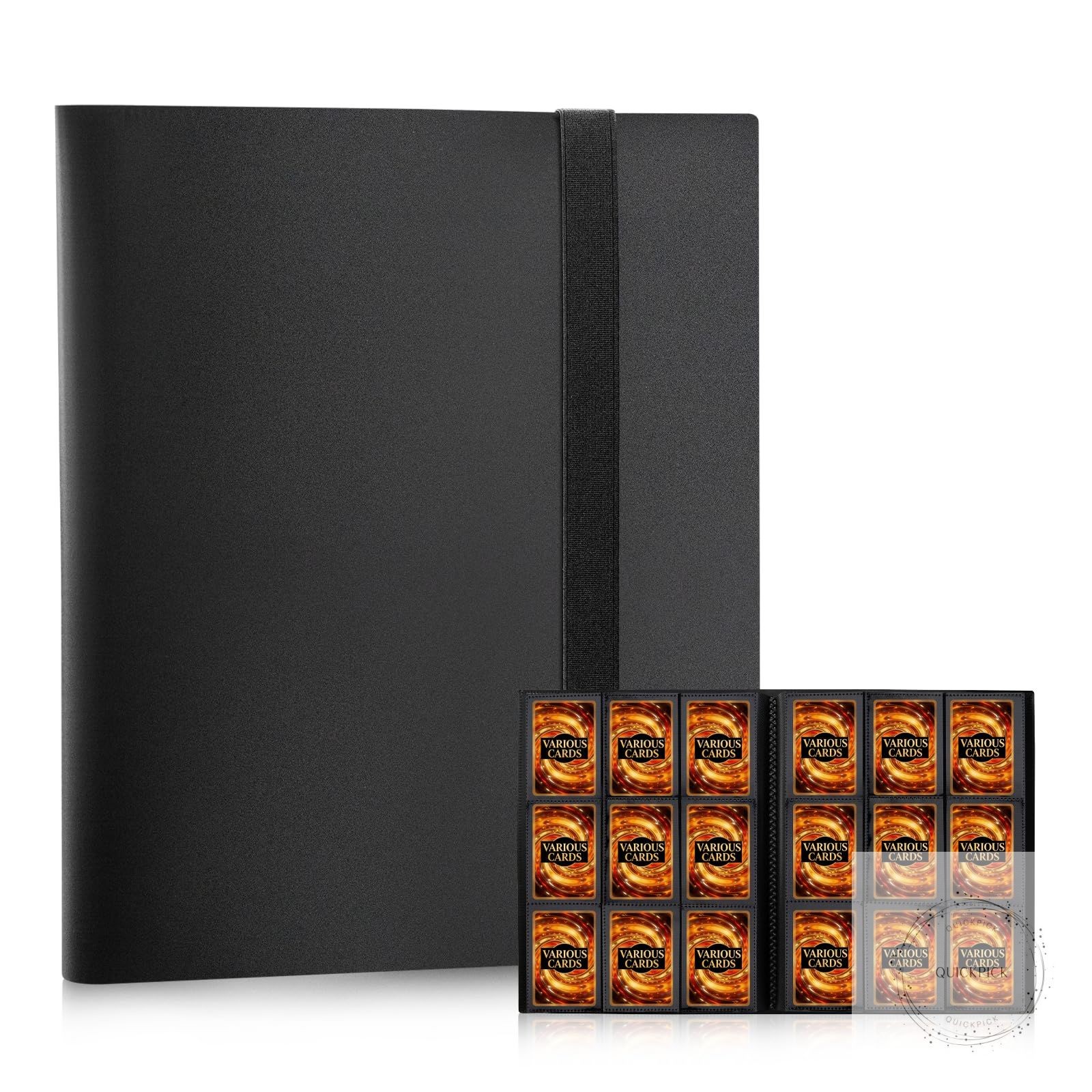
The Card Binder 9 Pocket is the cleaner fit for shoppers who want an album that is easy to browse. Its description calls out double-sided loading, and the package includes a single card binder, so the setup stays focused on organizing standard-size TCG cards rather than adding a larger storage system. That is the concrete reason to choose it: the format is straightforward and the package is easy to understand. Its limitation is the permanently bound page structure, which makes the format fixed rather than ringless. That matters if your organizing plan centers on a broader arrangement or enclosed closure. Choose this binder when a simple album, double-sided browsing, and a single-binder package are the priorities.
2300 Pocket Ringless Binder
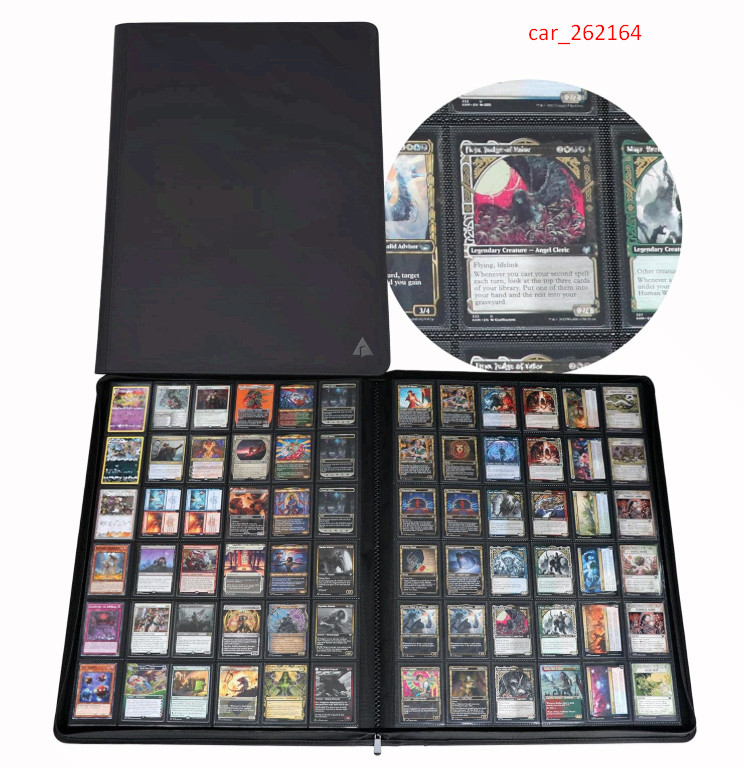
The 2300 Pocket Ringless Binder is the large-format choice. Its design combines side loading with a zippered closure, giving the binder an enclosed handling setup. The description also specifies padded, extra-rigid front and rear covers, non-slip water-resistant material, and low-friction black backing that separates the front and back pockets while creating a framed look. Those are concrete reasons to choose it when presentation and enclosure matter. The limitation is the stated Large size and the added cover-and-zipper structure, which may be unnecessary for someone seeking a basic album for straightforward browsing. Choose it when the ringless format, zipper, and cover structure are central to the purchase.
Final choice by use case
For standard-size TCG cards and a simple album brief, choose Card Binder 9 Pocket: the single-binder package and fixed-page construction keep the decision straightforward. For a large-format, ringless setup with enclosed handling and a display-oriented interior, choose 2300 Pocket Ringless Binder: its title and description make that configuration explicit. Because black polypropylene is shared, the meaningful choice is page structure and closure-not the common material.