Choosing gear for TCG playmats & collection display usually comes down to two different jobs: putting selected cards where they can be seen, or keeping a larger collection sorted and contained. These two options are not interchangeable. One is a clear-top tabletop case; the other is a four-box cardboard storage format.
Quick verdict
Choose the 34" x 22" Card Display Case when presentation is the priority. Its case design is built around a clear acrylic top, a tabletop mount, and a lockable format. Choose the 4-Pack • 5000-count Trading Card Storage Box when organized storage matters more, especially if standard-size cards and multiple compartments fit your sorting plan.
The practical distinction is display versus capacity-oriented storage: the first gives a collection a dedicated showcase, while the second packages cards into storage boxes intended for sorting and containment.
Listed price and format comparison
| Category | 34" x 22" Card Display Case | 4-Pack • 5000-count Trading Card Storage Box |
|---|---|---|
| Listed price | $159.00 | $35.12 |
| Format | 34" x 22" x 3" tabletop case | Four-box, 5000-count format |
| Card organization detail | One listed top-loader/card-holder position | Five compartments; standard card size |
Where each product wins
The display case wins for presentation
This is the better match for a collection that should be visible as part of a room, table, or event setup. The clear-top case format gives the purchase a display-first purpose, while the tabletop mount keeps that purpose straightforward. The lockable wording in the product name also makes it more suitable when cards need to stay contained inside a dedicated case.
The storage box wins for sorting
The four-box format is the more natural choice for organizing cards by game, set, deck, or collection segment. Five compartments add a defined sorting structure, and the standard-card sizing supports the intended trading-card use. It is a storage decision rather than a presentation decision, so it makes sense for shoppers focused on keeping cards grouped and contained.
Product notes
34" x 22" Card Display Case
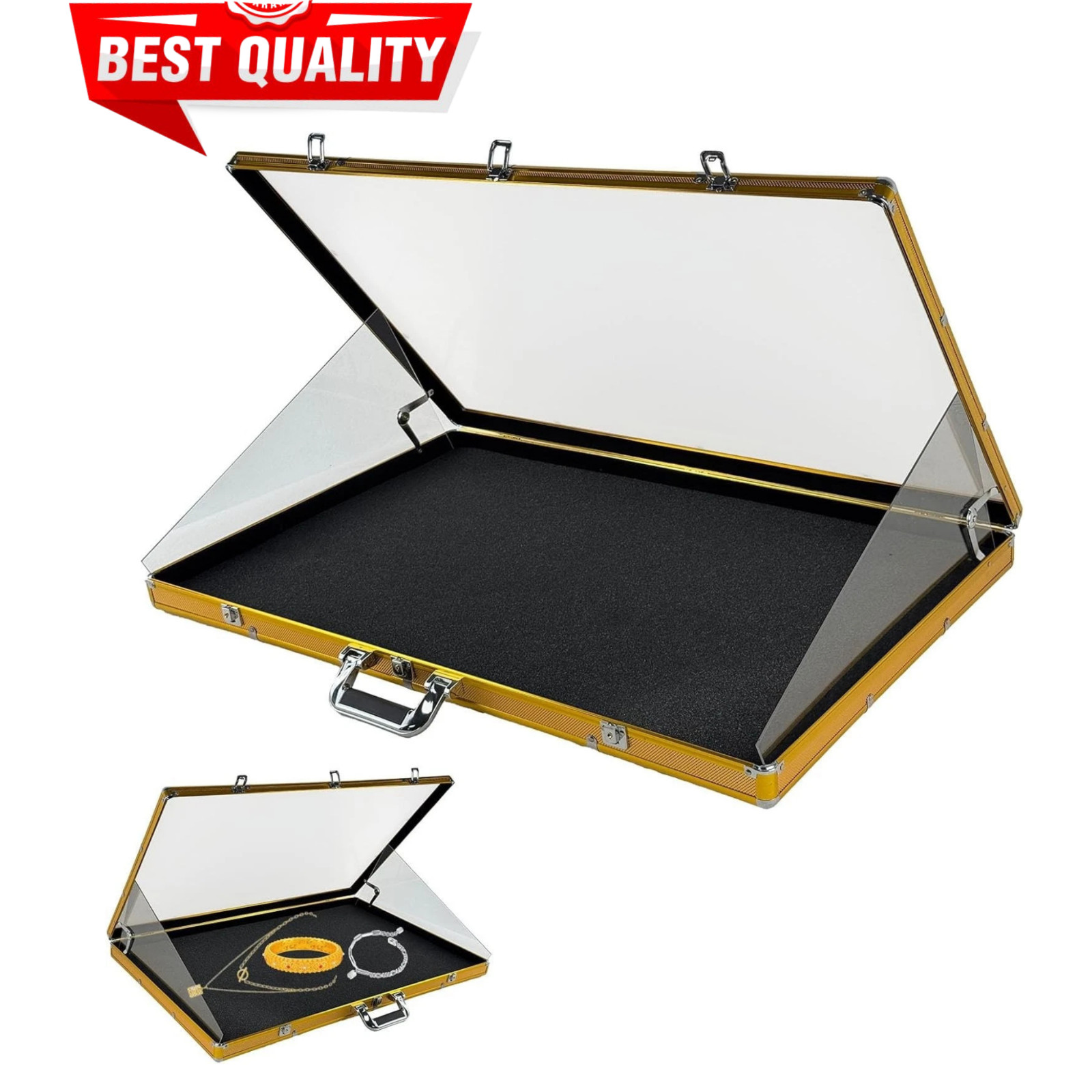
For a collection you want to present, the 34" x 22" Card Display Case has a clear acrylic top, an aluminum alloy frame, black velvet lining, an ABS fabric middle layer, and 1 cm of EVA sponge inside. Those details give it a dedicated showcase format rather than a simple container. The 34" x 22" x 3" dimensions and tabletop mount also make its intended placement concrete. The limitation is the single listed top-loader/card-holder position, which may not suit a display plan centered on many individually mounted cards. At $159, it is also the more expensive choice in this comparison. Choose it when visible presentation and a contained case matter more than sorting a large card quantity.
4-Pack • 5000-count Trading Card Storage Box
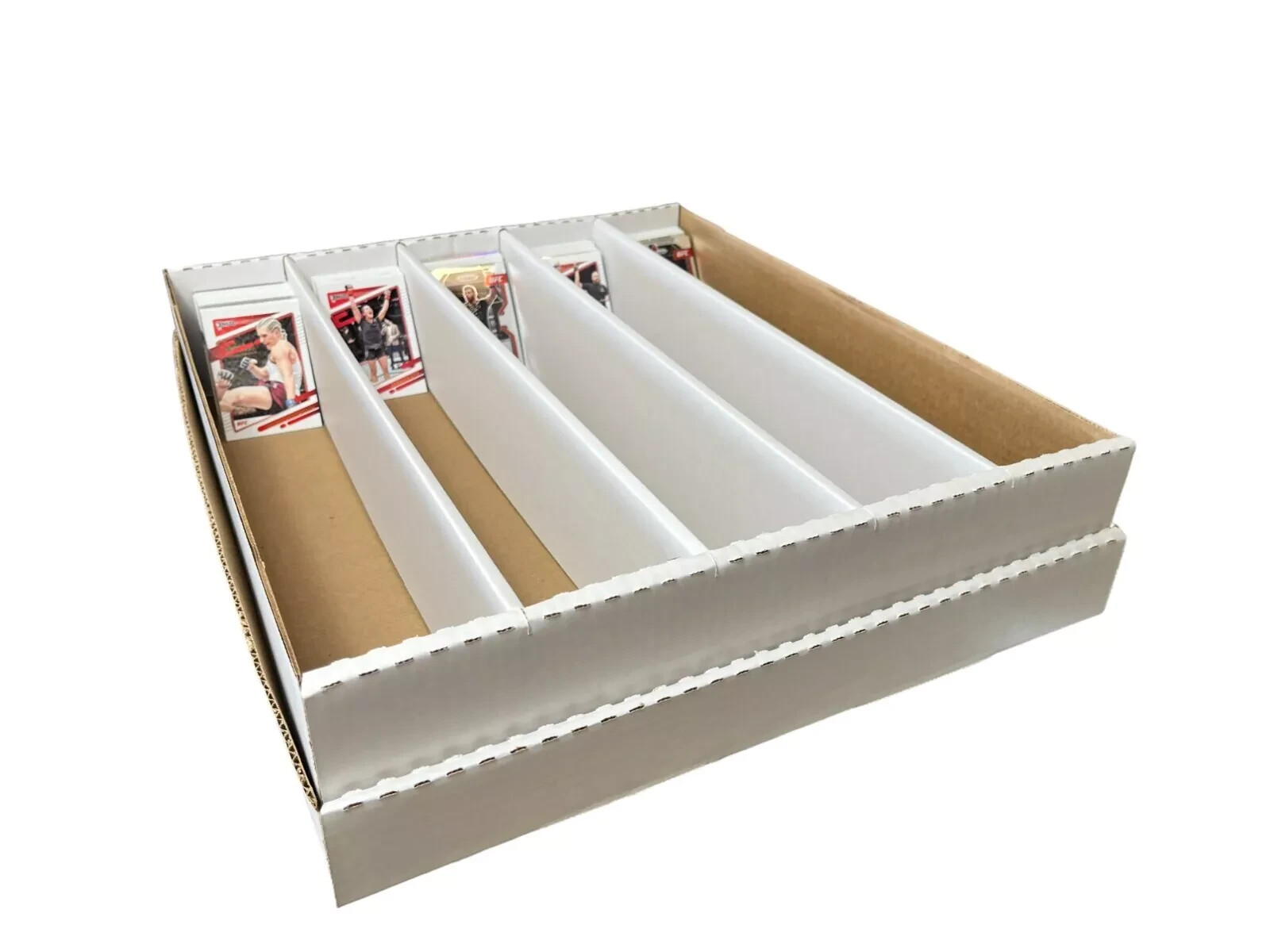
The 4-Pack • 5000-count Trading Card Storage Box is aimed at organized card keeping: it uses cardboard construction, includes five compartments, and is described for standard-size trading cards. The boxes assemble without tape or glue, and the stated capacity is 5000 standard trading cards, with a separate description of 7000 standard-sized gaming cards. That combination gives shoppers a clearly storage-focused format and a four-box package to work into a sorting system. Its limitation is the cardboard-box presentation: it is less suited to showcasing cards than the clear acrylic-top case. The $35.12 price also reflects a different purchase scope, so choose it for storage and organization rather than a tabletop display centerpiece.
Final choice by use case
- For display-first use: choose the 34" x 22" Card Display Case. The product name and clear acrylic-top format directly match a showcase role.
- For storage-first organization: choose the 4-Pack • 5000-count Trading Card Storage Box. Its four-box and 5000-count format better match sorting standard-size cards.
- For the price tie-breaker: the two listed prices are $123.88 apart, so decide on the job first. A display case and a storage box solve different collection problems, even when both are used for trading cards.