Choosing card sleeves & deck boxes is a storage-format decision: shoppers may need a case that accommodates changing sleeve setups, or one that keeps a collection sorted for easy identification. These two cases take different approaches. One centers on a large stated card-storage figure and multiple sleeve formats; the other presents a more defined storage setup with organization accessories. The practical choice is to match the case to how you store cards now.
Quick verdict
Card Deck Case for Trading Cards is the direct fit for shoppers prioritizing the larger stated storage figure. Trading Card Deck Case with Display Windows is the direct fit for shoppers prioritizing organized filing. Listed prices are USD 29.98 and USD 43.53, respectively, so the second requires the higher outlay. If capacity flexibility is the main concern, start with the first; if a structured sorting setup matters more, start with the second.
At a glance
| Product | Listed price | Stated storage and build |
|---|---|---|
| Card Deck Case for Trading Cards 3200+ Card Storage Box | USD 29.98 | 3200+ unsleeved cards; faux leather |
| Trading Card Deck Case for 1600 Cards | USD 43.53 | 1600 standard-size cards; laminated cardboard |
Where each case wins
Where the Card Deck Case wins
The Card Deck Case leads when the collection includes several sleeve configurations. Its title calls out a 3200+ Card Storage Box, while the description provides separate capacity figures for different sleeve formats. That makes it easier to compare the case with a collection that mixes unsleeved, penny-sleeved, and double-sleeved cards. The magnetic closure and front window pocket also give the design useful deck-storage and display details.
Where the Trading Card Deck Case wins
The Trading Card Deck Case is better aligned with top-loader storage and category labeling. Its description specifies room for up to 400 top loaders and 48 matching divider cards with writable tabs, while the title highlights display windows for MTG. For collections divided among sports, TCG, or MTG cards, those organizing elements create a more deliberate filing workflow.
Product notes
Card Deck Case for Trading Cards
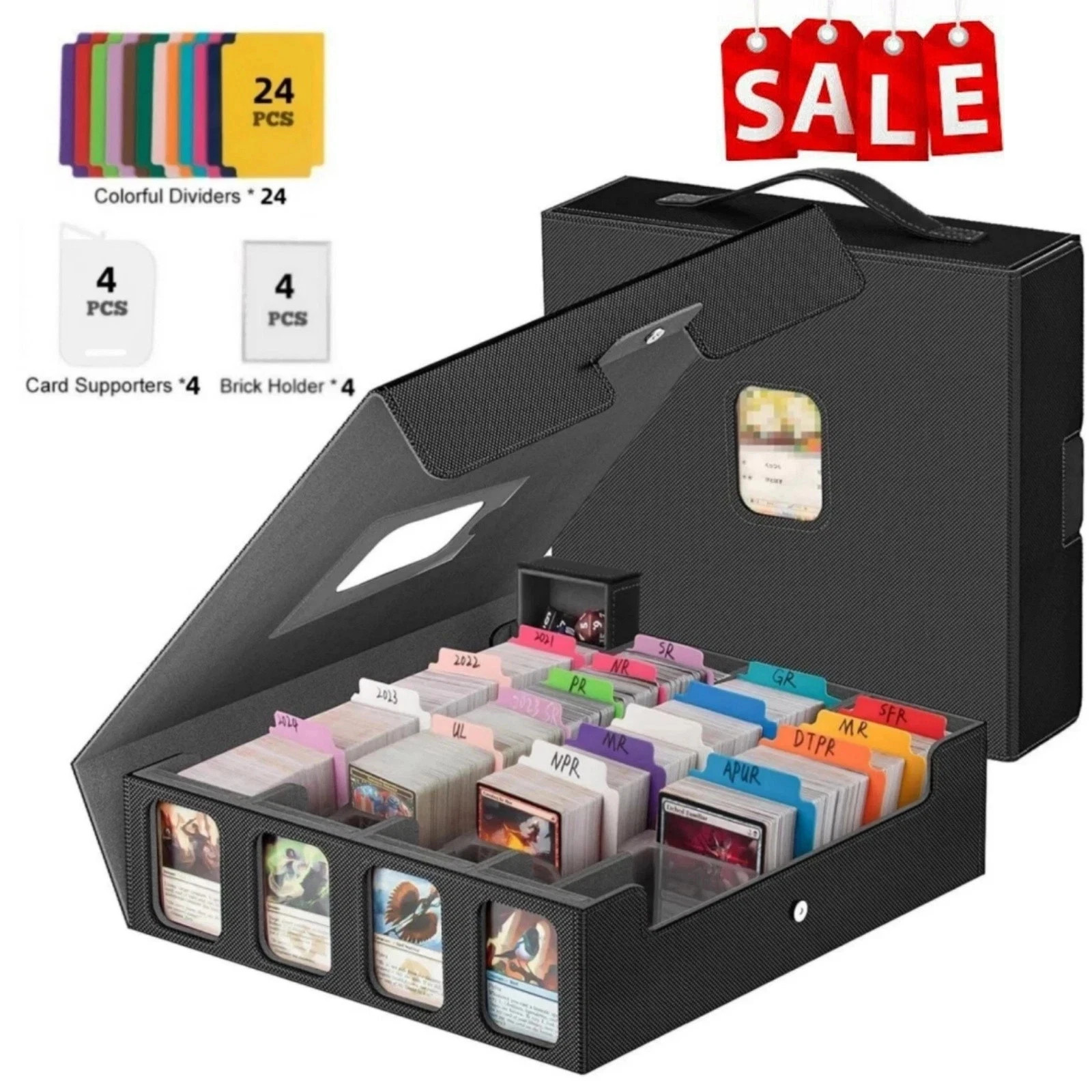
Choose Card Deck Case for Trading Cards when sleeve variety matters. Its description lists capacity for 2,200 penny-sleeved cards, 1,800 Dragonshield-sleeved cards, and 1,500 double-sleeved cards, giving shoppers concrete formats to compare before filling it. The magnetic closure, front window pocket, faux-leather exterior, and soft microfiber interior add useful specifics to the storage design. The limitation is footprint: the listed 14 x 11.38 x 4.49-inch dimensions deserve dedicated shelf space. Because capacity changes by sleeve type, match your collection to the relevant figure rather than treating one number as universal.
Trading Card Deck Case for 1600 Cards
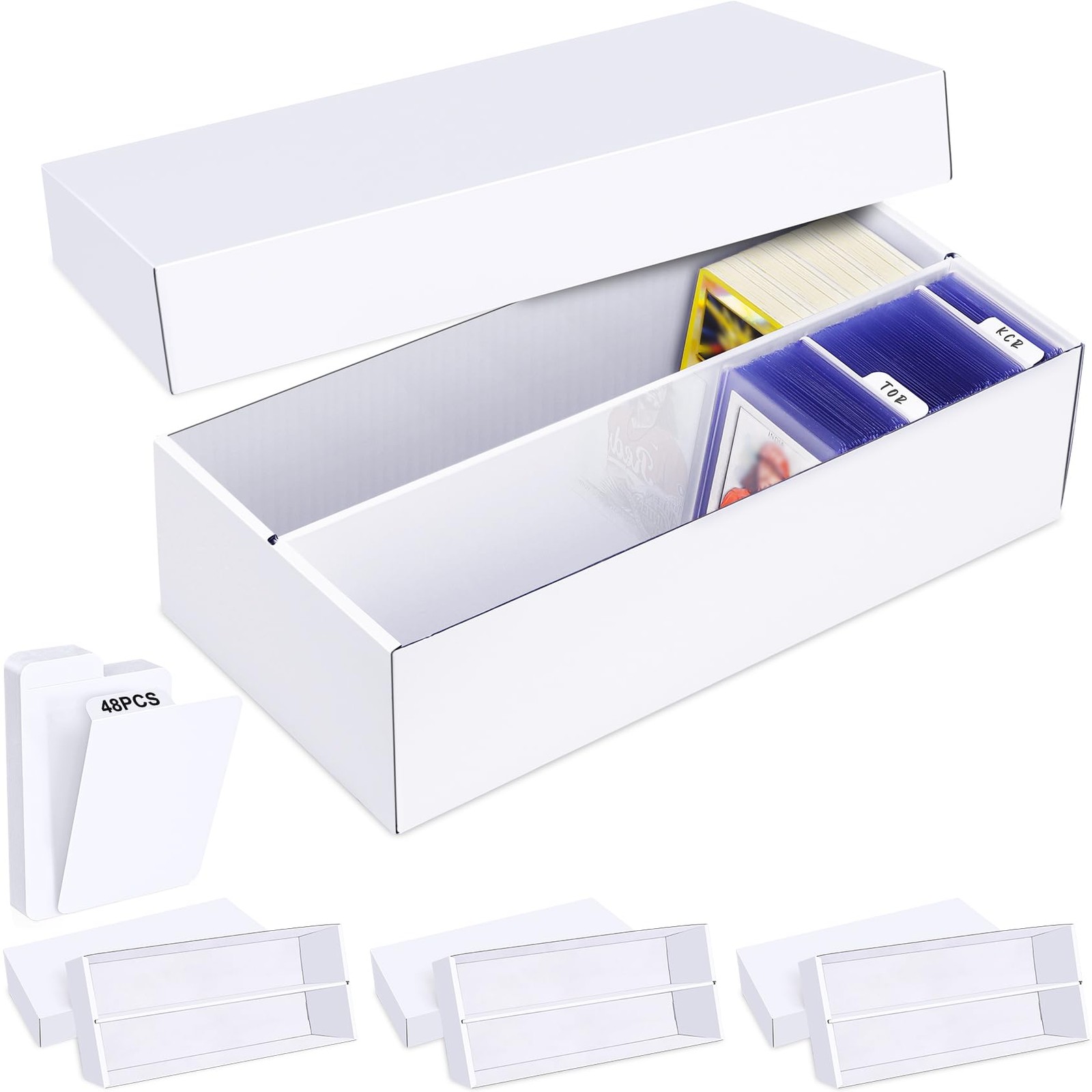
Choose Trading Card Deck Case for 1600 Cards when a stackable storage format is appealing. Its reinforced laminated cardboard construction is described as stackable and resistant to wear, moisture, and stacking pressure, giving it a clear shelf-storage role. The limitation is the two-row layout and listed compatible card size of 15.16 x 6.8 x 4.53 inches; those specifications are important to match to the way your collection is arranged. The defined format may be less suitable for shoppers who mainly want broad sleeve-format flexibility, but it offers a straightforward structure for collections that benefit from orderly storage.
Final choice by use case
- Mixed sleeve formats or double-sleeved cards: choose Card Deck Case for Trading Cards. Its sleeve-format capacity details and magnetic closure align with that use.
- Top loaders and labeled sorting: choose Trading Card Deck Case with Display Windows. Its top-loader capacity and writable-tab dividers match that workflow.
- If the lower listed price is decisive: choose Card Deck Case for Trading Cards, which is the lower-priced case in this comparison.
Overall, the Card Deck Case is the more direct match for varied sleeve configurations, while the Trading Card Deck Case is the more natural fit for top-loader organization and labeled sorting.