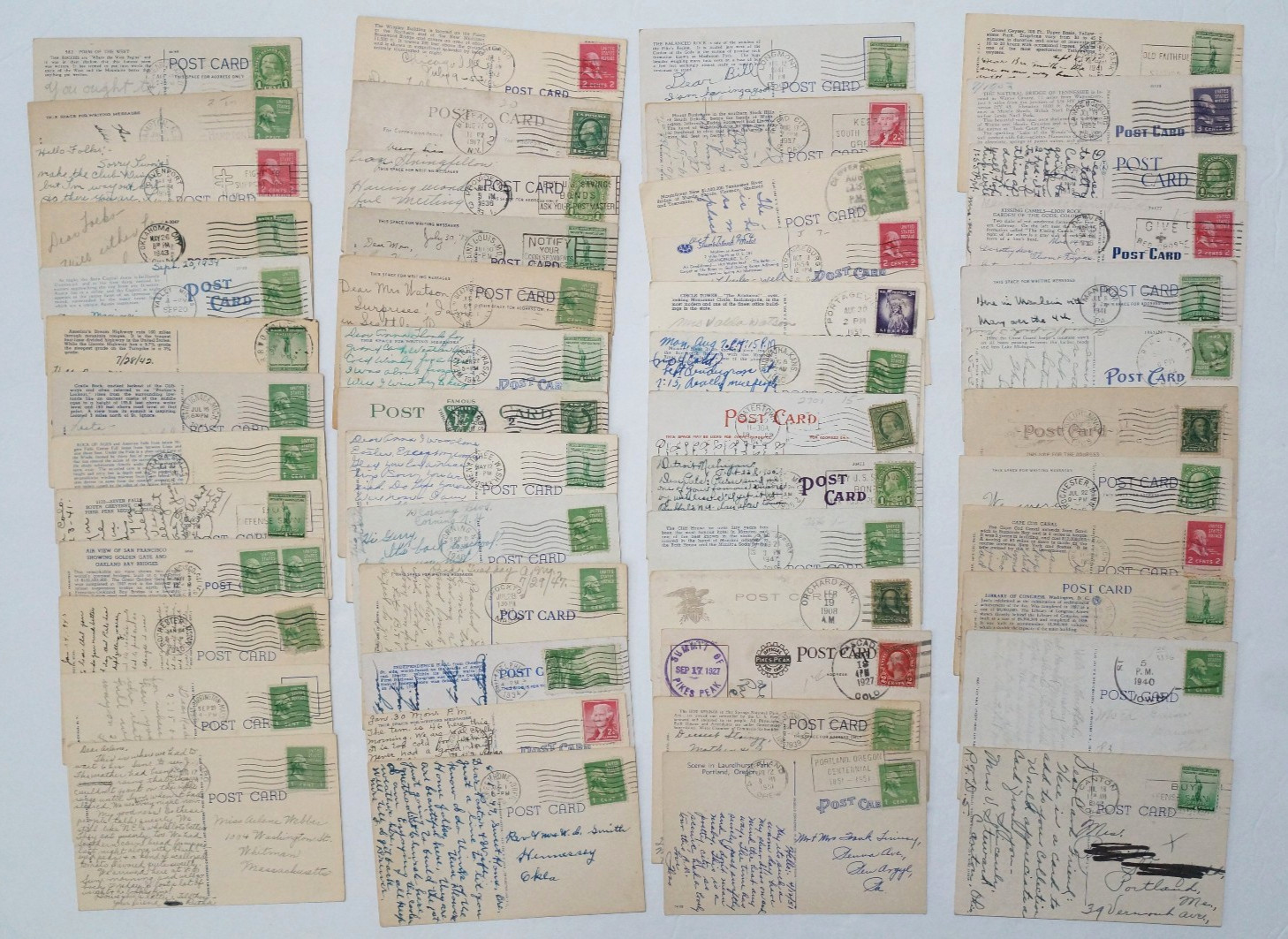

Photos from current listings. Actual item, color, and included accessories may vary.
Old Postcard Buying Guide
Old postcards are antique or vintage mailed cards valued for their postmarks, stamps, handwriting, and historical imagery. The key trade-off is between common bulk lots with mixed condition and curated single cards with clear cancels and clean corners. Buy bulk lots for volume and sorting; buy single cards when postmark date, publisher, or subject must be verifiable.
At a glance
- Category
- Stamps & Postcards
- Last updated
- Nov 23, 2026
Current offers
Highlights
- Era dating: undivided backs (pre-1907) vs divided backs (1907 onward) determine age and value; white-border and linen textures mark the 1930s-50s.
- Postmark cancellation: clear, dated machine or hand cancels prove actual mailing and add provenance; smudged or missing cancels drop a card to picture-only value.
- Stamp condition: intact, unpeeled stamps with readable denominations (1c-3c Washington/Franklin era) signal authenticity; missing or soaked stamps reduce collector appeal.
- Lot grading: 50-card lots typically mix fair to very good condition; expect creases, corner wear, and album residue unless the listing states sorted or hand-picked.
Best use cases
- Best fit: buy 50-card mixed lots if you want volume for crafting, resale sorting, or topical browsing; skip single premium cards unless the postmark is pictured clearly.
- Best fit: buy single cards with clear 1907-1915 divided-back cancels for genealogy or local-history research; skip undivided-back lots if you need dated correspondence.
- Best fit: buy linen-era (1930s-50s) lots for colorful roadside and town views; skip them for pre-1920 photographic realism or real-photo postcards.
- Wrong fit: buying large lots for investment-grade collecting; curated singles with clear cancels and sharp corners outperform bulk on resale.
Buying tips
- Check the back format first: undivided backs date before 1907 and usually carry higher value; divided backs (1907+) are common and cheaper in bulk.
- For mailed cards, confirm the postmark year is visible; sellers should show the cancel in the photo, not just the stamp.
- Grade corners and edges: very good cards have sharp corners and no creases; lots under 50 cards often hide 20-30% fair-grade duplicates.
- Match stamp era to card era: a 1c Franklin stamp suits 1900s-1920s cards; a 3c stamp or later meter mark on a linen card is period-correct.
Specs
| Back Format | Undivided (pre-1907) vs Divided (1907+) |
|---|---|
| Era / Texture | White border 1915-30 / Linen 1930-50 |
| Postmark | Clear dated cancel vs none/smudged |
| Lot Condition | Mixed fair-VG vs sorted VG+ singles |
Related searches
What to check before buying
- Measure your album or storage: standard postcards are 3.5 x 5.5 inches; confirm sleeves and pages match before buying a lot.
- Check your climate: store cards below 50% relative humidity and away from UV light; linen and photo cards fade and warp in damp attics.
- Confirm shipping protection: lots should ship rigid and waterproof; creased corners in transit permanently lower grade.
- Verify topical relevance: for local-history buying, confirm the town/state mix in the lot matches your research area before ordering.
FAQ
Data sources: eBay / Amazon listings and product attribute feeds. Updated Nov 23, 2026.
Some links on this page are affiliate links. If you buy after clicking one, we may earn a commission at no extra cost to you. This does not change which products appear here or their order. Affiliate disclosure.