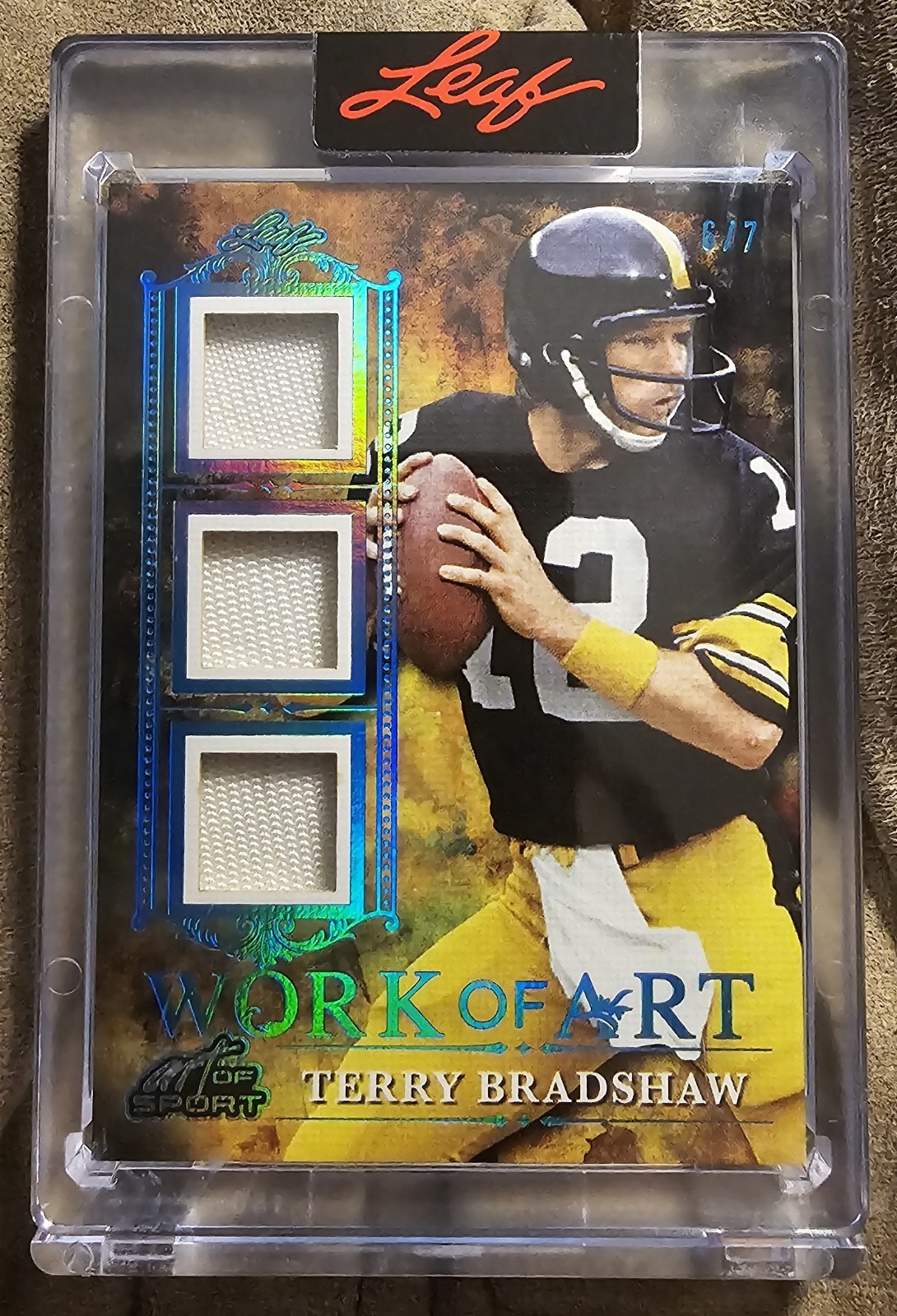

Photos from current listings. Actual item, color, and included accessories may vary.
Sport Card Buying Guide
Sports cards are collectible trading cards featuring athletes from football, baseball, basketball, and hockey, spanning base rookies to autograph memorabilia patches. The core trade-off is print scarcity versus condition: serial-numbered short prints and authenticated grades hold value, while mass-produced base cards and raw ungraded singles are commodity items. The decision rule is simple—buy slabbed or serial-numbered cards from recognized brands when investing, and raw base or low-end inserts only for personal player collections.
At a glance
- Category
- Football Cards
- Last updated
- Nov 23, 2026
Current offers
Highlights
- Serial numbering (e.g., /5, /7, /99) denotes exact print run scarcity; lower denominators materially increase secondary-market demand and liquidity.
- Game-used memorabilia patches (jersey, towel, football) command premiums over manufactured relics; patch color breaks and multi-color swatches grade higher.
- Professional grading (PSA, BGS, CGC, SGC) slabs authenticate condition on a 1–10 scale; a half-point grade difference can shift value by double-digit percentages.
- Brand tier matters: Panini Prizm, Optic, and Leaf Art of Sport sit above retail blaster exclusives; rookie-year and Hall-of-Fame subjects outperform veteran base.
Best use cases
- Best fit: buying a serial-numbered patch card of a Hall-of-Fame player (e.g., Thurman Thomas /5, Terry Bradshaw /7) for a focused PC—skip unnumbered base parallels.
- Best fit: investing in graded rookie cards of active stars from flagship sets—choose PSA/BGS 9+ slabs over raw copies for resale liquidity.
- Wrong fit: buying ungraded vintage or high-end rookies without authentication—raw corners and trimming risk make grade-guessing a net loss; buy slabbed only.
- Wrong fit: treating low-tier retail blaster inserts as investment—mass print runs cap upside; reserve those for set-building or kid collections.
Buying tips
- Match the serial denominator to your budget tier: /99 to /199 for entry-level numbered cards, /25 and lower for premium patches, /10 or less for true SSPs.
- Insist on grading from PSA, BGS, CGC, or SGC for any card above raw-book value; off-brand slabs resell at a discount and are harder to authenticate.
- Verify patch authenticity: game-used memorabilia swatches should be labeled 'event-worn' or 'player-worn'; manufactured relics are worth a fraction.
- Buy rookie-year cards of Hall-of-Famers and MVP-caliber active players first; veteran base and non-rookie parallels depreciate fastest.
Specs
| Card Type | Base / Insert / Patch / Autograph |
|---|---|
| Print Run | Serial-numbered /5 to /199 vs unnumbered |
| Grading | PSA / BGS / CGC / SGC slab, 1-10 scale |
| Memorabilia | Game-used patch vs manufactured relic |
Related searches
What to check before buying
- Confirm the card is professionally slabbed (PSA/BGS/CGC/SGC) or comes with a serial-numbered stamp visible in the listing photos before committing.
- Check the exact print run and parallel name against the manufacturer's set checklist—Leaf Art of Sport, Panini Prizm, and Optic use distinct numbering schemes.
- Verify patch type: game-used jersey/football swatches are premium; manufactured patches and commemorative relics are lower tier.
- For raw cards, inspect centering, corner sharpness, and surface scratches in high-resolution photos—any visible wear likely caps the grade below 9.
FAQ
Data sources: eBay / Amazon listings and product attribute feeds. Updated Nov 23, 2026.
Some links on this page are affiliate links. If you buy after clicking one, we may earn a commission at no extra cost to you. This does not change which products appear here or their order. Affiliate disclosure.