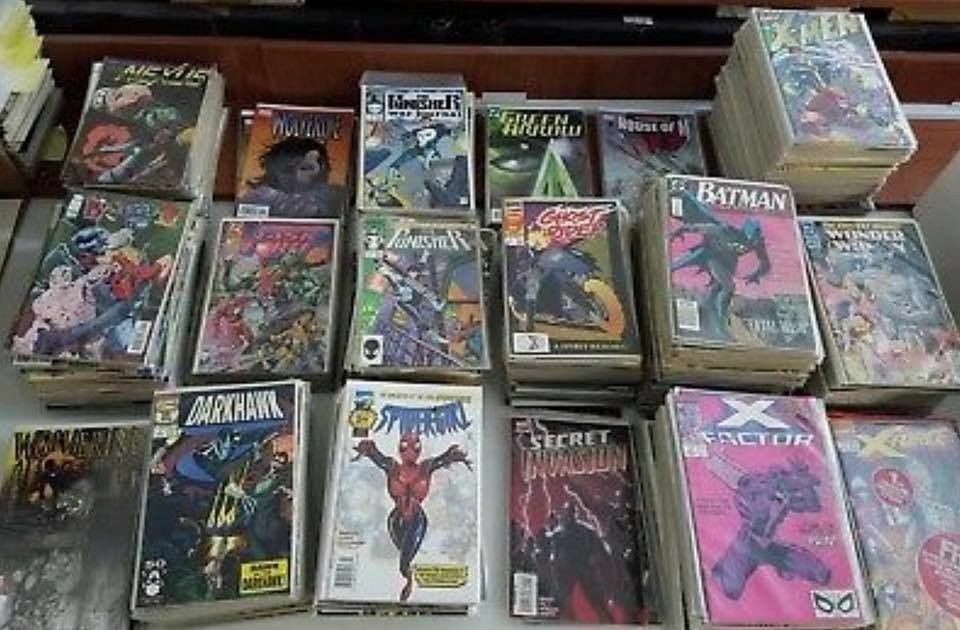

Photos from current listings. Actual item, color, and included accessories may vary.
Marvel Age Of Comic Buying Guide
The Marvel Age of Comics is the foundational period from 1961 onward when Stan Lee, Jack Kirby, and Steve Ditko created the interconnected Marvel Universe, and it remains the key dividing line for collectors assessing Silver Age and Bronze Age issues. The primary trade-off is between high-grade raw copies with structural flaws and professionally graded slabs that lock in condition and authentication, and the decision rule is simple: buy CGC or CBCS graded keys for investment, and buy raw reader copies only when structural completeness and page count are verified.
At a glance
- Category
- Comic Books & Issues
- Last updated
- Nov 23, 2026
Current offers
Highlights
- Marvel Age begins with Fantastic Four #1 (Nov 1961) and ends around 1973 with the Bronze Age shift toward antiheroes and social themes.
- Silver Age Marvel covers use 12-cent to 15-cent price boxes; Bronze Age issues shift to 20-cent, 25-cent, and 30-cent tiers.
- Key first appearances drive value: FF #1, Amazing Fantasy #15, X-Men #1, and Avengers #4 anchor the era's hierarchy.
- CGC grading on a 10-point scale with page quality (White, Off-White, Cream) directly sets liquidity and resale velocity.
Best use cases
- Best fit: collectors assembling a Silver Age Marvel run should target CGC 4.0-6.0 mid-grade keys for balance of eye appeal and cost; skip raw high-grade copies without graders' notes.
- Best fit: readers wanting the stories should buy Marvel Masterworks or Epic Collection reprints; skip expensive low-grade originals for reading copies.
- Best fit: Bronze Age horror and antihero runs (Tomb of Dracula, Werewolf by Night, Luke Cage) reward raw mid-grade buying; skip slabbed common issues that carry grading premiums without scarcity.
- Wrong fit: buying unsigned raw 'grails' without provenance or restoration checks; skip any copy with trimmed edges or color touch, which CGC flags as restored and kills liquidity.
Buying tips
- Grade math matters: a CGC 9.4 can be worth multiples of a CGC 9.0, so buy the highest grade your budget allows on keys rather than spreading across many mid-grade duds.
- For raw books, verify complete stories and cent count; Marvel Silver Age books are typically 12-15 cents and Bronze 20-30 cents, and clipped coupons reduce grade.
- Page quality is a grading pillar: White pages command premiums over Cream-to-Off-White, especially on Bronze Age horror and Conan issues.
- Restoration detection: trimmed edges, color touch, and piece replacement are flagged by CGC; always prefer blue-label universal grades over purple restored labels for investment.
Specs
| Era Window | 1961-1973 (Silver to Bronze) |
|---|---|
| Cover Price Tiers | 12-15¢ Silver; 20-30¢ Bronze |
| Grading Standard | CGC/CBCS 10-pt, page quality noted |
| Key Driver | First appearances + grade/page quality |
Related searches
What to check before buying
- Confirm the issue's exact cover date and price variant; Marvel Age books include UK pence variants and 30-cent price variants that differ in scarcity.
- Storage: use acid-free Mylar bags with full-back boards and keep in a cool, dry space below 70°F and 50% humidity to prevent foxing and spine roll.
- Check for Marvel Value Stamps (1974-1975) or clipped coupons; these cut grade significantly and should be priced as incomplete.
- For slabbed buying, verify the CGC or CBCS certification number matches the label and check the grader's notes for restoration or page quality.
FAQ
Data sources: eBay / Amazon listings and product attribute feeds. Updated Nov 23, 2026.
Some links on this page are affiliate links. If you buy after clicking one, we may earn a commission at no extra cost to you. This does not change which products appear here or their order. Affiliate disclosure.